Arabic
 English
 Spanish
 French
 Japanese
 Korean
 Russian
 German
 Portuguese
 Italian
 Turkish


A wine dispenser machine is an innovative device designed to serve and preserve wine, ensuring that each glass poured maintains its optimal flavor and aroma. These machines are becoming indispensable in both home and commercial settings, transforming how wine is enjoyed and managed.
By utilizing inert gases like argon or nitrogen, wine dispensers prevent oxidation, the primary cause of wine spoilage, allowing opened bottles to remain fresh for weeks or even months. Beyond preservation, they offer precise portion control, ideal serving temperatures, and an elegant presentation, making them a cornerstone of modern wine service.
Whether for a casual enthusiast looking to savor a single glass without committing to an entire bottle, or a bustling restaurant aiming to offer an extensive by-the-glass program, wine dispenser machines provide unparalleled convenience, quality, and efficiency.
What Does a Wine Dispenser Machine Do?
A wine dispenser machine fundamentally serves two critical functions: precise dispensing and effective preservation. At its core, it allows for the serving of wine by the glass without uncorking the entire bottle, thus minimizing waste and maximizing variety.
Historically, wine service was limited by the rapid oxidation of opened bottles, forcing consumers and establishments to either finish a bottle quickly or risk spoilage. The advent of wine dispenser machines, particularly those utilizing inert gas preservation, marked a significant milestone in wine service, enabling extended freshness.
Key components typically include a temperature-controlled chamber to store wine at ideal serving temperatures, a dispensing mechanism for controlled pouring, and a gas preservation system that injects inert gas into the bottle as wine is drawn, creating a protective blanket over the wine’s surface. This innovative design ensures that each pour is as fresh as the first, revolutionizing the wine experience for both connoisseurs and casual drinkers.
How Does Gas Preservation Extend Wine Freshness?
Oxidation is the primary enemy of opened wine, causing it to lose its vibrant flavors and aromas and eventually turn into vinegar. Wine dispenser machines combat this by employing inert gas preservation systems.
These systems introduce a blanket of inert gas—typically nitrogen or argon—into the wine bottle as wine is dispensed, preventing oxygen from coming into contact with the wine’s surface. This creates a protective barrier that significantly extends the wine’s freshness, allowing it to be enjoyed for weeks or even months after opening.
When comparing nitrogen and argon for wine preservation, both are effective inert gases, but they possess distinct properties:
- Nitrogen: Nitrogen is more affordable and readily available. It is slightly lighter than air, meaning it needs to be continuously introduced to effectively displace oxygen. While effective, its lighter density can sometimes lead to less complete oxygen displacement compared to argon.
- Argon: Argon is heavier than both air and nitrogen, making it highly effective at creating a dense, protective layer over the wine. This superior density allows it to more efficiently purge oxygen from the bottle, leading to longer preservation times.
Argon is also less reactive than nitrogen, further ensuring the wine’s integrity. While generally more expensive than nitrogen, its enhanced preservation capabilities often justify the cost, especially for high-value wines or commercial settings where extended freshness is paramount.
Both gases work by preventing the chemical reaction between wine and oxygen, thus preserving the wine’s delicate balance of flavors and aromas. The choice between nitrogen and argon often depends on factors such as budget, desired preservation duration, and the type of wine being preserved.
Which Features Differentiate Home vs Commercial Dispenser Systems?
Wine dispenser systems cater to a diverse range of users, from individual wine enthusiasts to large-scale hospitality businesses. While the core function of preserving and dispensing wine remains consistent, the features and capabilities of home and commercial systems differ significantly to meet their respective demands.
| Feature | Home Wine Dispenser | Commercial Wine Dispenser |
|---|---|---|
| Capacity | Typically 1-4 bottles; compact designs | Multiple bottles (e.g., 4-16+); modular and expandable |
| Temperature Zones | Single or dual temperature zones | Multiple independent temperature zones for different wines |
| Durability | Designed for occasional use; lighter construction | Robust, heavy-duty construction for continuous operation |
| Dispensing Control | Manual or pre-set pour sizes | Highly precise, programmable portion control; often automated |
| Preservation Gas | Smaller, replaceable gas cartridges (argon/nitrogen) | Larger, refillable gas tanks; integrated gas management systems |
| الصيانة | Simple, user-friendly cleaning and upkeep | Requires more frequent and specialized cleaning; professional servicing recommended |
| Advanced Features | Basic preservation and temperature control | AI-powered analytics, RFID/QR code recognition, remote monitoring, sales tracking |
| يكلف | Lower initial investment | Higher initial investment; focus on ROI and operational efficiency |
Home wine dispensers prioritize ease of use, compact design, and affordability, making them suitable for personal enjoyment and small gatherings. They typically offer basic preservation and temperature control, allowing enthusiasts to enjoy their favorite wines by the glass without waste.
Commercial wine dispensers, on the other hand, are built for high-volume usage and demanding environments. They emphasize durability, precision, and advanced functionalities that contribute to operational efficiency and profitability.
Features like multiple independent temperature zones, highly accurate portion control, and integrated sales analytics are crucial for restaurants, bars, and hotels looking to offer a premium by-the-glass program and maximize their wine revenue. The higher initial cost is offset by increased sales, reduced waste, and enhanced customer experience, leading to a significant return on investment (ROI).
What Are the Costs & ROI for Restaurants?
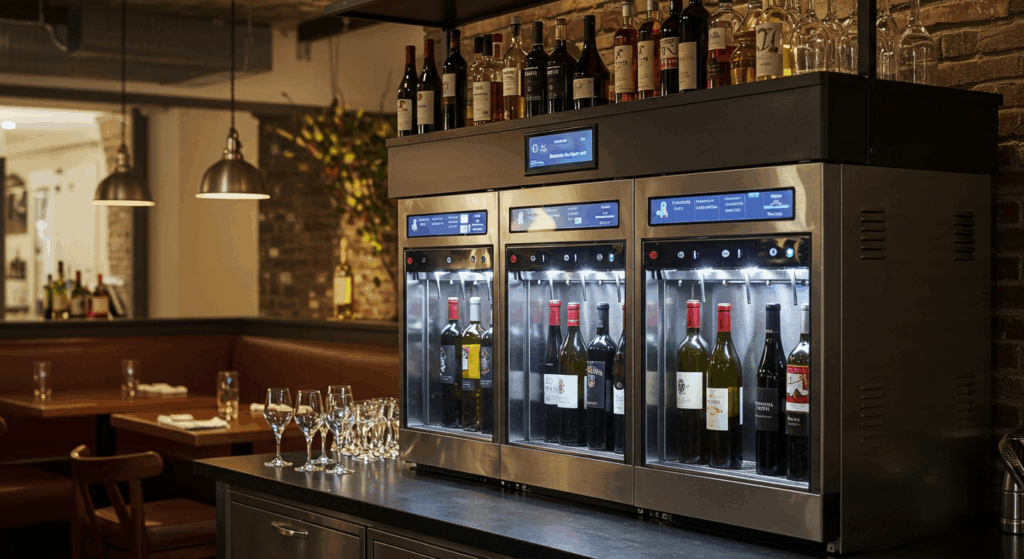
For restaurants, bars, and hotels, investing in a commercial wine dispenser machine is not merely about convenience; it’s a strategic business decision with a clear return on investment (ROI). While the initial outlay for a commercial system can be substantial, ranging from a few thousand to tens of thousands of dollars depending on capacity and features, the long-term benefits often far outweigh the costs.
The primary drivers of ROI for commercial wine dispensers include:
- Reduced Spoilage and Waste: By preventing oxidation, wine dispensers drastically cut down on the amount of wine that goes to waste. This is particularly critical for high-end or specialty wines that might otherwise be discarded if not sold quickly after opening. For example, a restaurant might save hundreds or even thousands of dollars monthly by eliminating spoilage.
- Increased By-the-Glass Sales: The ability to offer a wider selection of wines by the glass encourages customers to try more expensive or diverse options they might not commit to buying an entire bottle of. This expands the wine program and can significantly boost revenue. Many establishments report a 15-30% increase in wine sales after implementing a dispenser system.
- Enhanced Customer Experience: Offering fresh, perfectly preserved wine at the ideal temperature elevates the dining experience. Customers appreciate the quality and variety, leading to increased satisfaction, repeat business, and positive word-of-mouth.
- Operational Efficiency: Automated dispensing ensures consistent pour sizes, reducing human error and speeding up service. This frees up staff to focus on other tasks and ensures accurate inventory management.
To calculate the ROI, consider the following:
- Initial Investment: Cost of the dispenser unit(s), installation, and initial gas supply.
- Operating Costs: Ongoing costs for gas refills, maintenance, and potential repairs.
- Increased Revenue: Estimate the additional revenue generated from increased by-the-glass sales and reduced spoilage.
For instance, if a restaurant typically wastes 10 bottles of premium wine per week at an average cost of $50 per bottle, that’s $500 in weekly losses, or $2,000 per month.
A wine dispenser that eliminates 80% of this waste would save $1,600 per month. Coupled with a modest increase in by-the-glass sales, the payback period for a $10,000 system could be as short as 6-12 months. After this period, the system continues to generate pure profit through ongoing savings and increased sales.
How to Choose the Right Capacity & Temperature Zones?

Selecting the appropriate wine dispenser involves careful consideration of capacity and temperature zones, which directly impact its functionality and suitability for your specific needs. Whether for home use or a commercial establishment, making the right choice ensures optimal wine preservation and service.
Here’s a 5-step checklist to guide your selection:
- Consider Preservation Technology:
- Gas Type: Decide between nitrogen and argon based on your budget, desired preservation duration, and the value of the wines you intend to preserve. Argon generally offers superior preservation.
- Sealing Mechanism: Look for robust sealing mechanisms that effectively prevent oxygen ingress during and after dispensing.
- Assess Your Needs (Home vs. Commercial):
- Home Use: Consider how frequently you open bottles, the variety of wines you consume, and your available space. A smaller unit (1-4 bottles) with single or dual temperature zones is usually sufficient.
- Commercial Use: Evaluate your expected daily wine-by-the-glass volume, the number of different wines you wish to offer, and peak service times. Larger capacity units (4-16+ bottles) with multiple independent temperature zones are essential for managing diverse offerings and high demand.
- Determine Required Capacity:
- Bottle Count: How many bottles do you need to have open and accessible at any given time? This will dictate the number of dispensing heads required.
- Future Growth: For commercial settings, consider scalability. Can the system be expanded with additional modules if your wine program grows?
- Evaluate Temperature Zone Requirements:
- Single Zone: Suitable if you primarily serve one type of wine (e.g., only reds or only whites) or if ambient temperature control is sufficient for your needs.
- Dual Zone: Ideal for homes or smaller establishments that serve both red and white wines, allowing each to be stored at its optimal serving temperature simultaneously.
- Multi-Zone (Commercial): Crucial for restaurants and bars offering a wide selection, including sparkling wines, dessert wines, and various reds and whites, each requiring precise temperature control for optimal enjoyment.
- Review Maintenance and Support:
- Cleaning: Understand the cleaning requirements and ease of maintenance. Commercial units often require more rigorous cleaning protocols.
- Service and Warranty: Check for manufacturer warranty and availability of local service and support, especially for commercial investments.
- Wine Dispenser Maintaining and Cleaning Guide
By systematically addressing these factors, you can select a wine dispenser machine that perfectly aligns with your operational needs, enhances your wine service, and ensures every glass is a testament to quality and freshness.
Is a Wine Dispenser Better Than Using Coravin?
While wine dispenser machines offer comprehensive solutions for serving and preserving multiple bottles, another popular preservation tool, Coravin, provides a different approach. Coravin systems allow wine to be poured from a bottle without removing the cork, using a needle to access the wine and replacing the dispensed volume with argon gas. This method ensures that no oxygen ever touches the wine, theoretically preserving it indefinitely.
The choice between a wine dispenser and a Coravin system depends largely on individual needs and usage patterns:
- Wine Dispenser: Ideal for those who frequently serve wine by the glass from multiple bottles, require precise temperature control, and value an elegant presentation. It’s particularly suited for commercial settings or home enthusiasts who host often and want to offer a diverse selection.
- Coravin: Best for preserving single, high-value bottles over extended periods, especially for collectors who wish to sample wines without committing to opening the entire bottle. It offers unparalleled preservation for individual bottles but lacks the multi-bottle serving and display capabilities of a dispenser.
If you want to find a wine dispenser machine solutions, please cnotact our team.